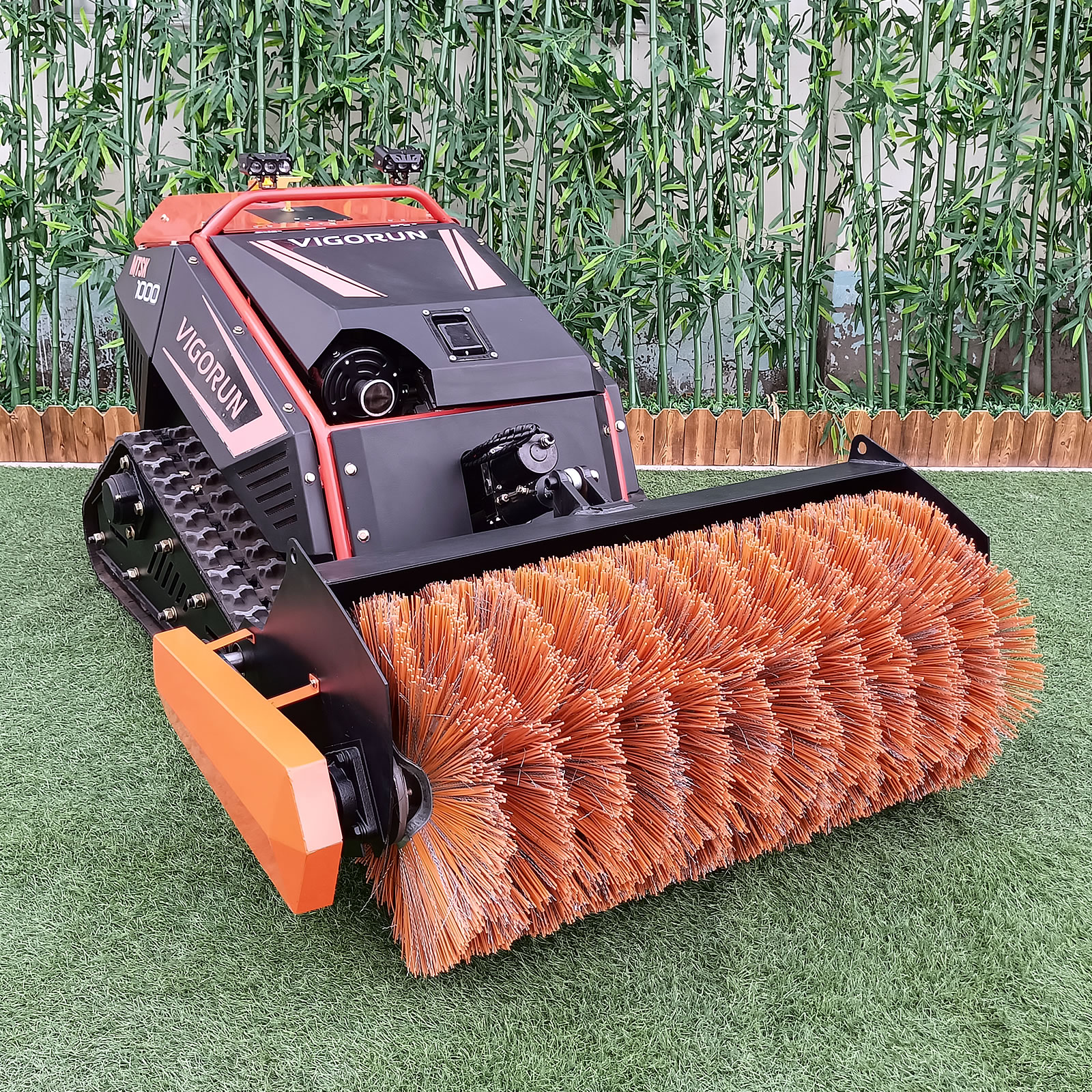
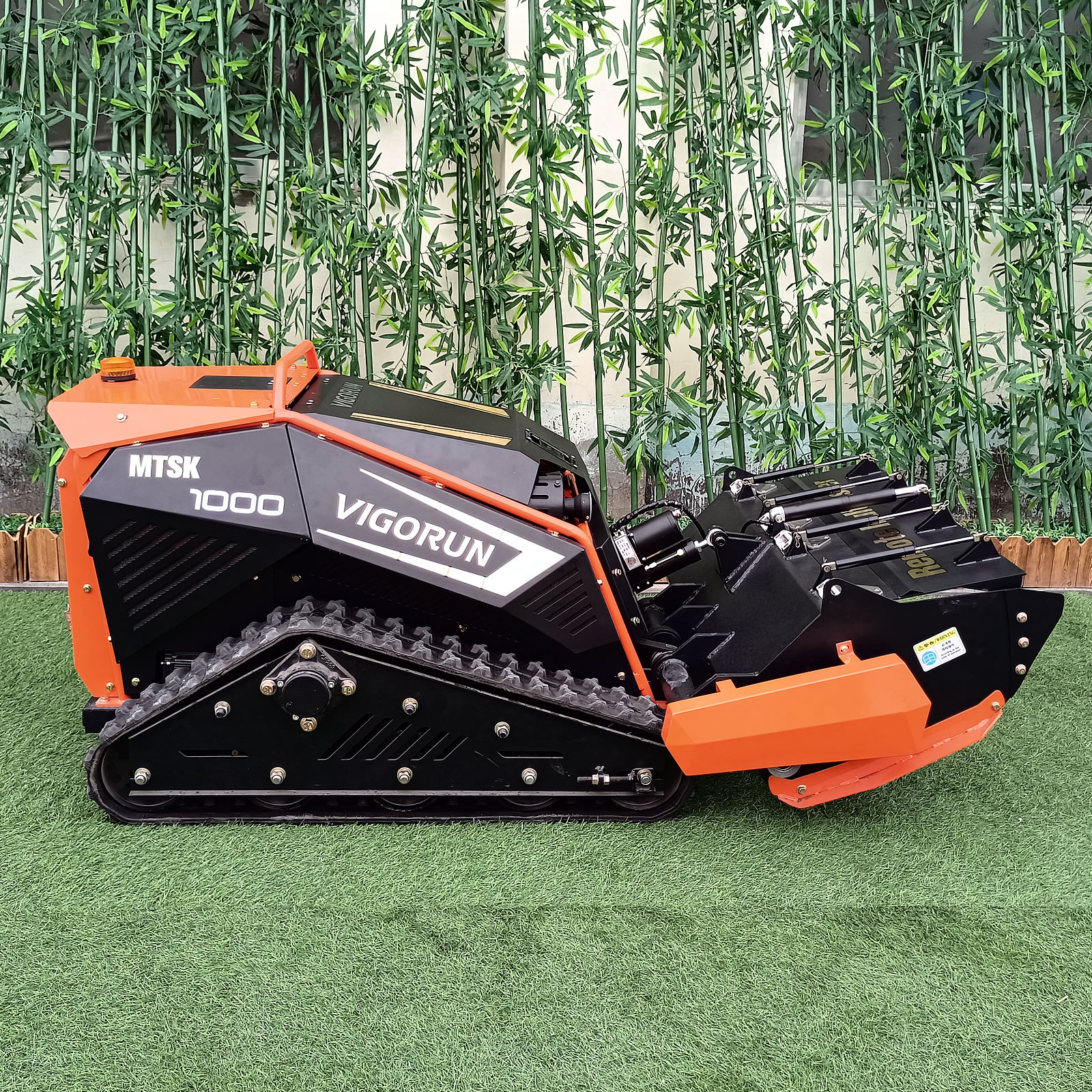
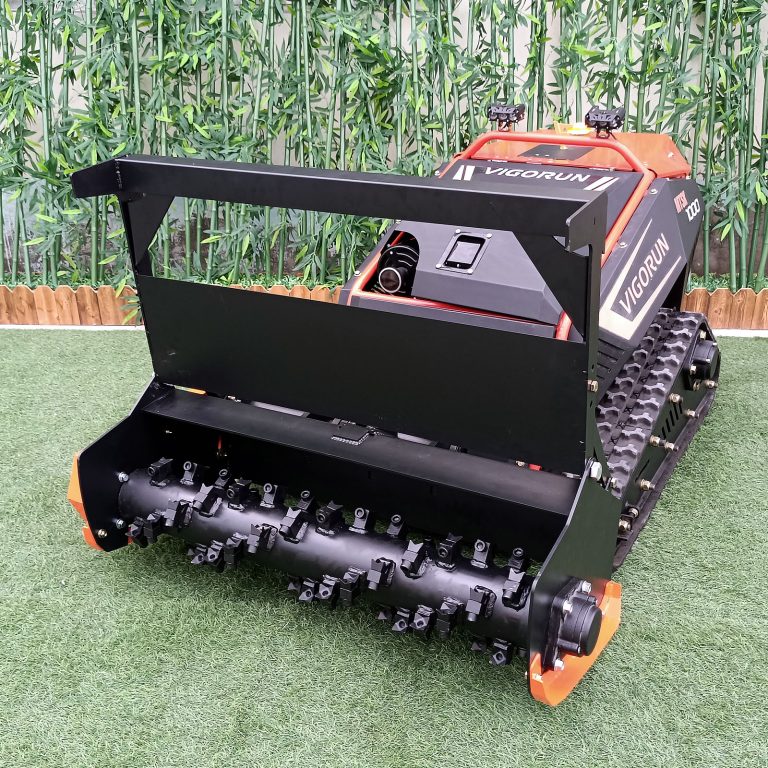
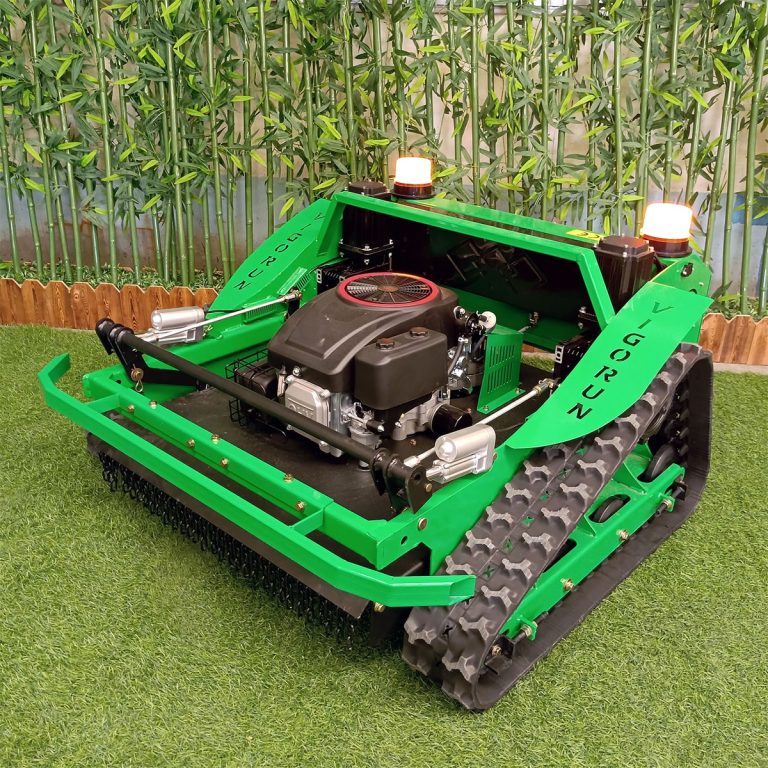
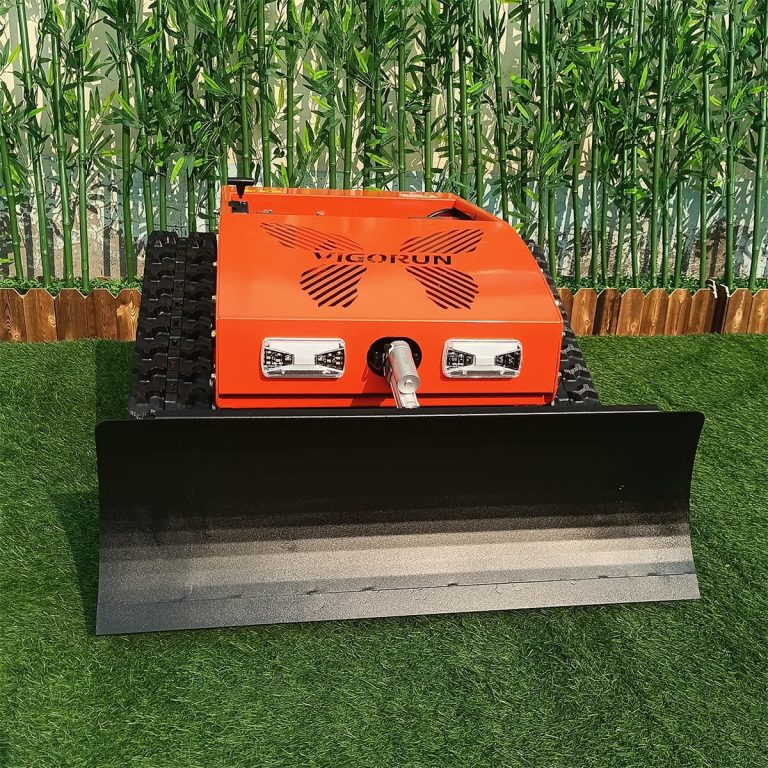
The Loncin 764CC gasoline engine is a powerhouse that drives our crawler remote controlled angle snow plow. Featuring a V-type twin-cylinder design, this engine provides robust performance with a rated power of 18 kW at 3600 rpm. Its efficient construction ensures that it can handle heavy-duty tasks effectively, making it an ideal choice for various challenging environments.
This engine is equipped with a clutch that engages only when it reaches a predetermined rotation speed, which enhances its operational efficiency. This feature allows the machine to perform optimally without unnecessary wear and tear, ensuring longevity and reliability in demanding snow plowing conditions.
The combination of the powerful 764cc gasoline engine and the state-of-the-art design ensures that users can tackle snow removal tasks with confidence. The engine’s strong output guarantees that the snow plow can cut through dense snow with ease, providing a clean and efficient clearing process.
Features and Benefits of the Crawler Remote Controlled Angle Snow Plow
The crawler remote controlled angle snow plow is designed for versatility and ease of use. It is equipped with two 48V 1500W servo motors, which deliver exceptional power and climbing ability. The built-in self-locking function ensures that the machine remains stationary when not in use, greatly enhancing operational safety.
One of the standout features of this snow plow is its high reduction ratio worm gear reducer. This mechanism amplifies the servo motor torque, enabling the machine to climb steep inclines without slipping. Additionally, even during a power outage, the friction between the worm and gear maintains mechanical self-locking, ensuring safety and performance consistency on slopes.
The intelligent servo controller allows for precise regulation of motor speed while synchronizing the left and right tracks. This technology enables the snow plow to maintain a straight path, reducing the need for constant adjustments by the operator and minimizing risks associated with overcorrection.

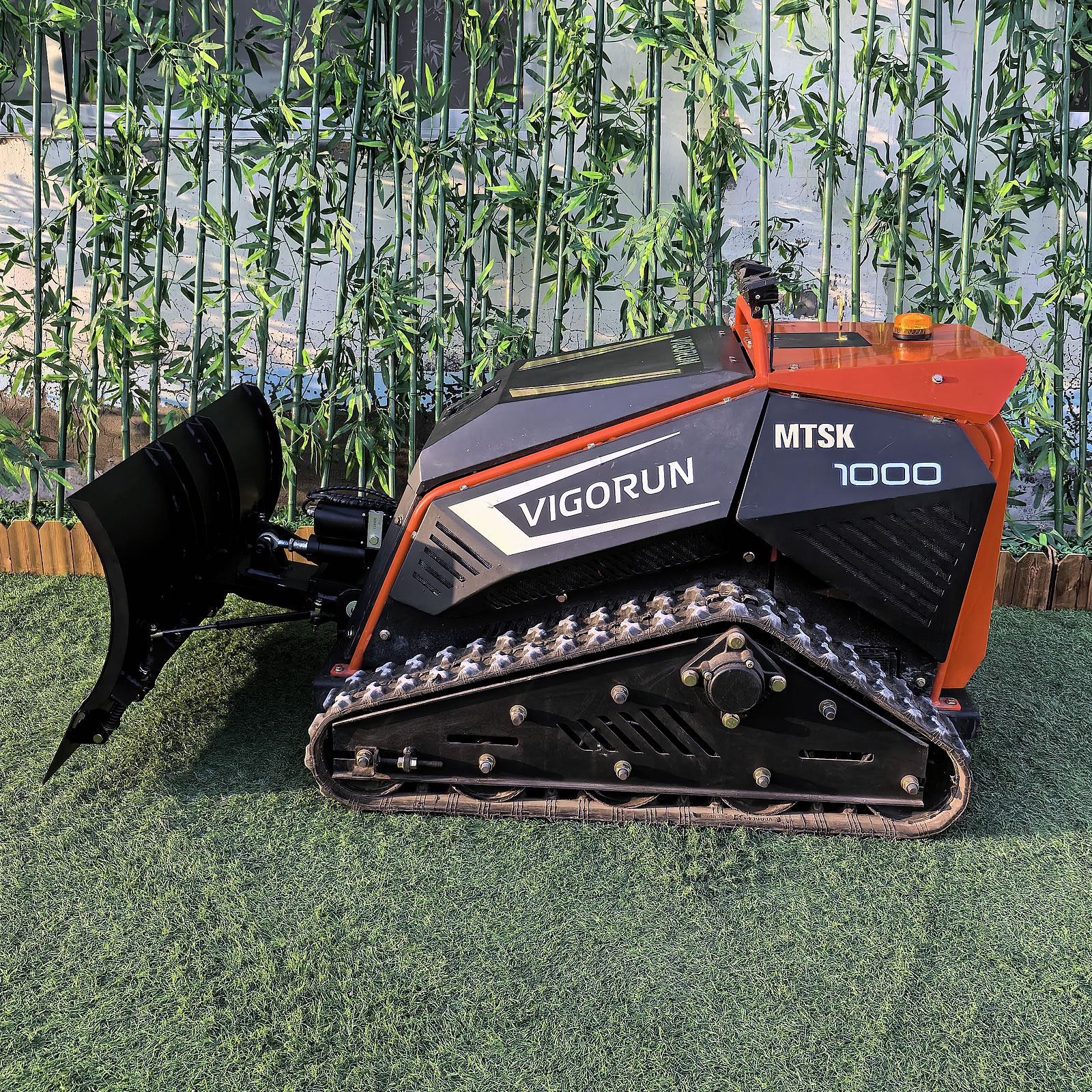 The Loncin 764CC gasoline engine is a powerhouse that drives our crawler remote controlled angle snow plow. Featuring a V-type twin-cylinder design, this engine provides robust performance with a rated power of 18 kW at 3600 rpm. Its efficient construction ensures that it can handle heavy-duty tasks effectively, making it an ideal choice for various challenging environments.
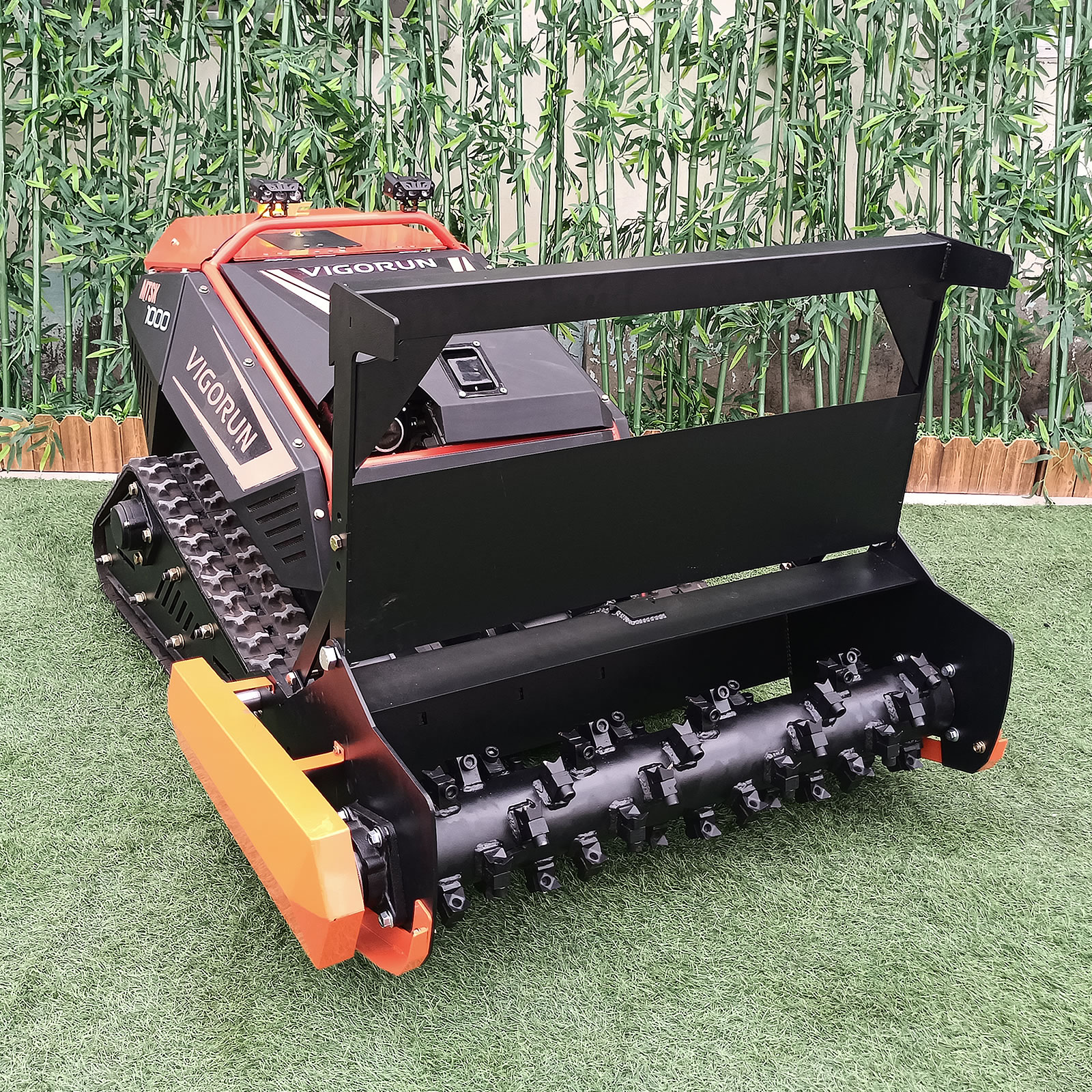 This engine is equipped with a clutch that engages only when it reaches a predetermined rotation speed, which enhances its operational efficiency. This feature allows the machine to perform optimally without unnecessary wear and tear, ensuring longevity and reliability in demanding snow plowing conditions.
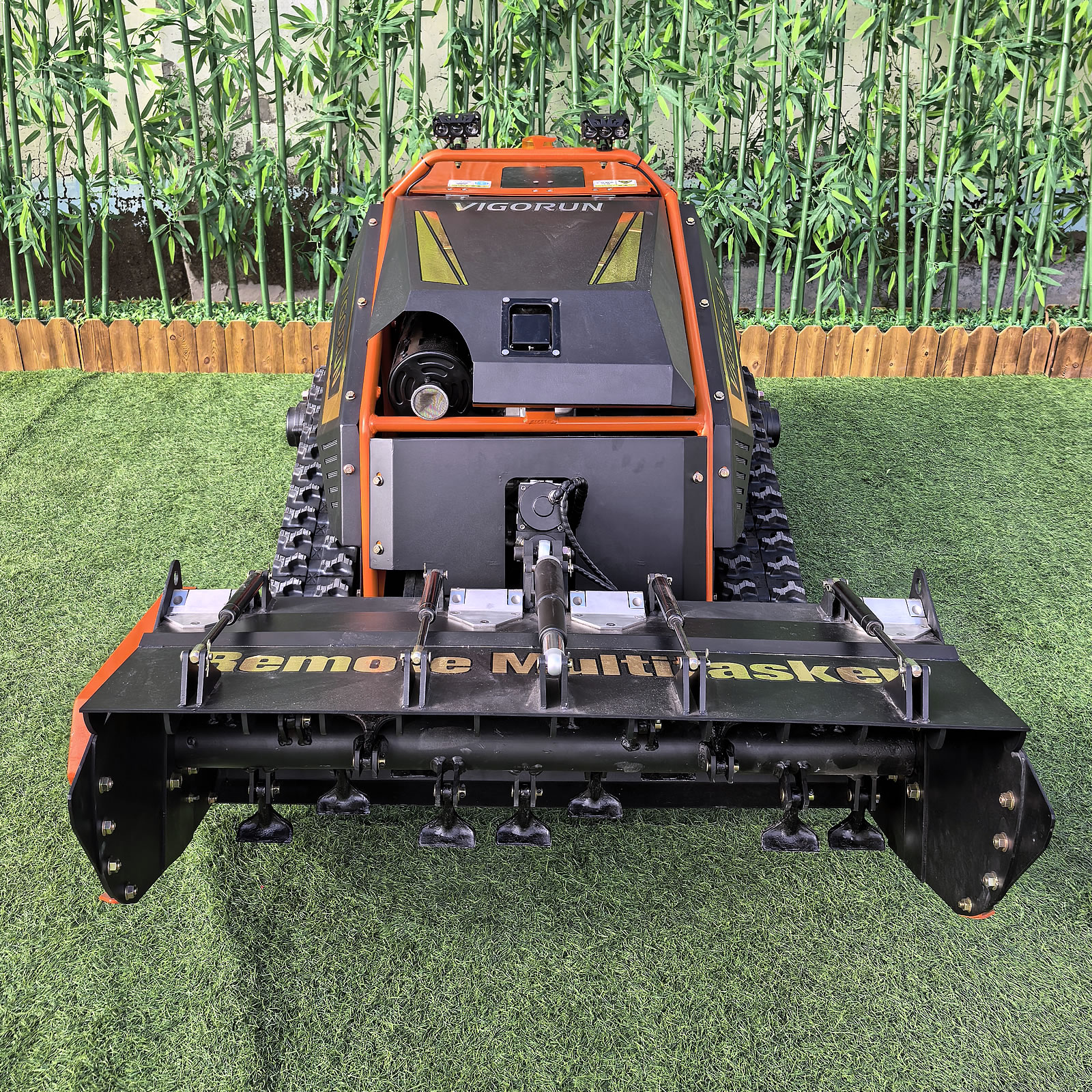 The combination of the powerful 764cc gasoline engine and the state-of-the-art design ensures that users can tackle snow removal tasks with confidence. The engine’s strong output guarantees that the snow plow can cut through dense snow with ease, providing a clean and efficient clearing process.