Table of Contents
Introducing the Agricultural Robotic Gasoline Zero Turn Compact Remote Control Flail Mulcher
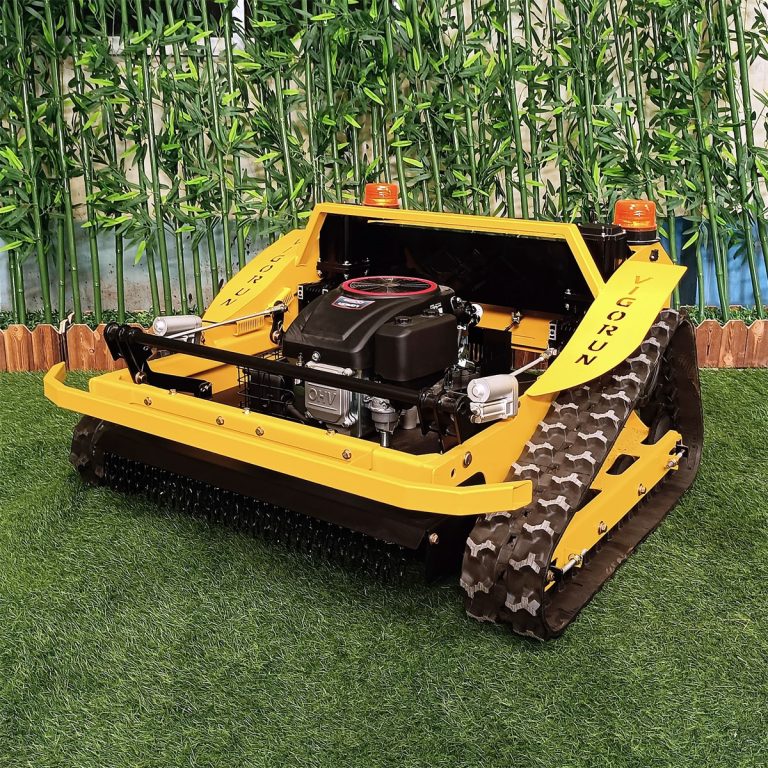
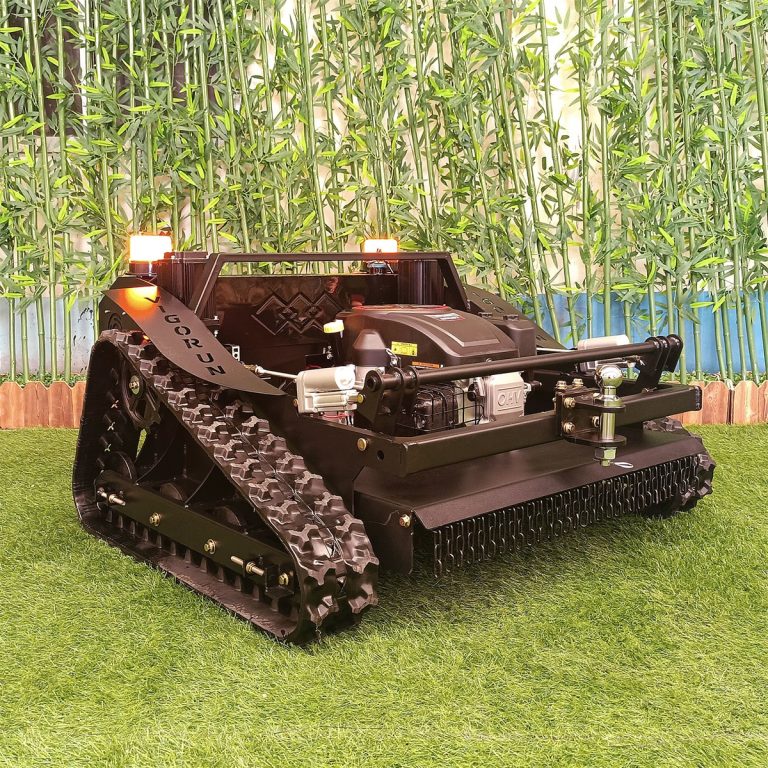
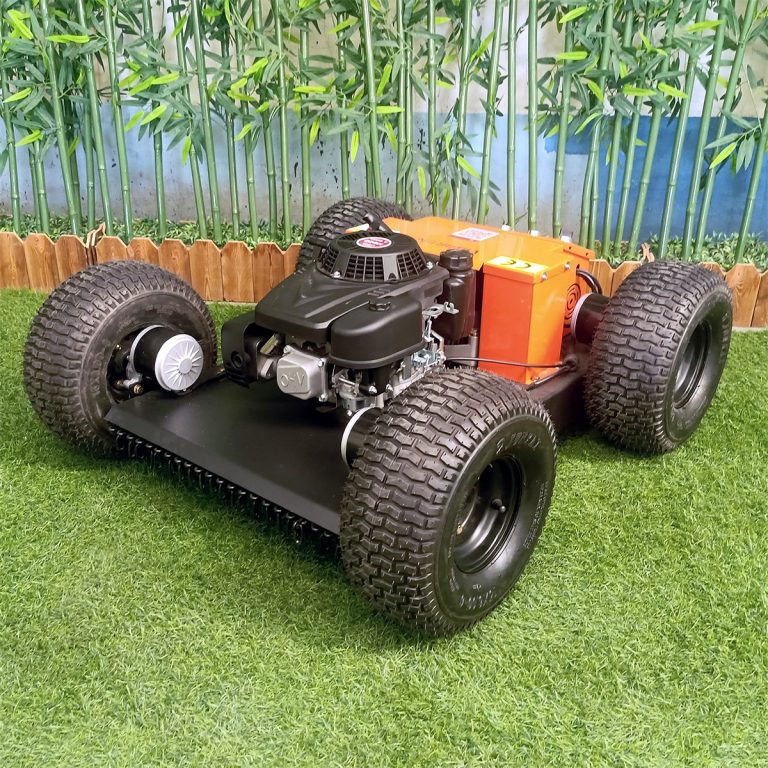
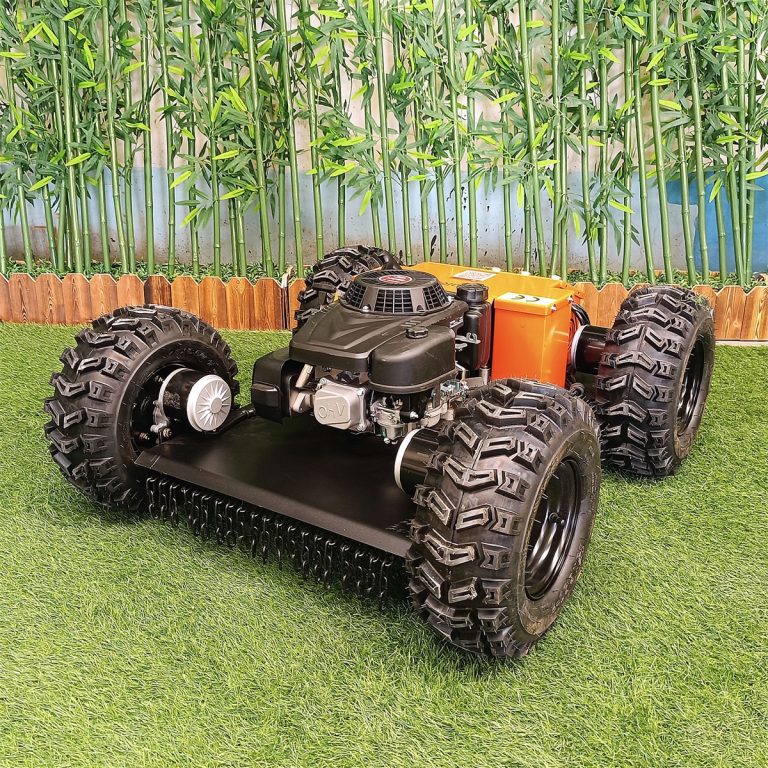
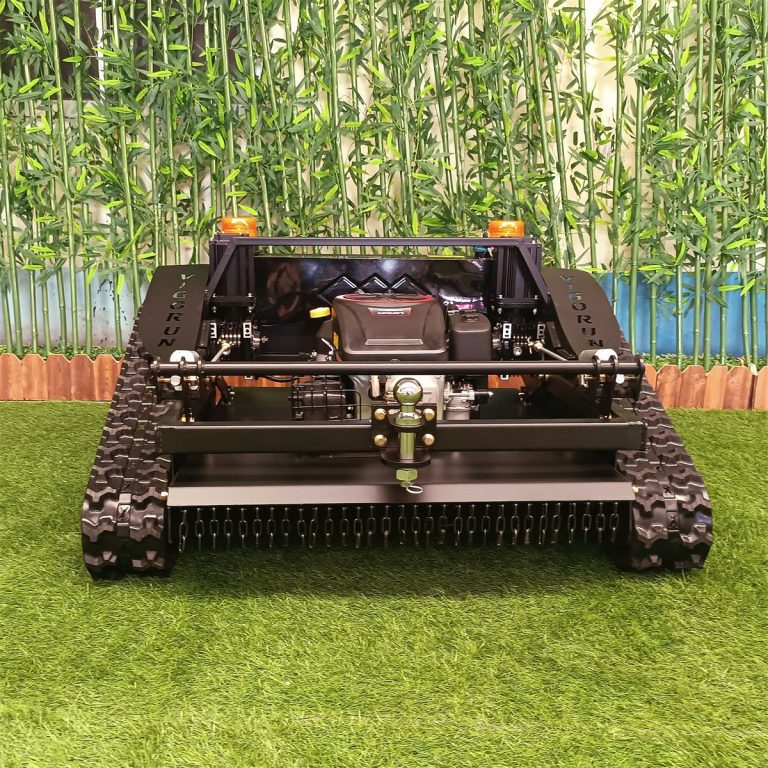
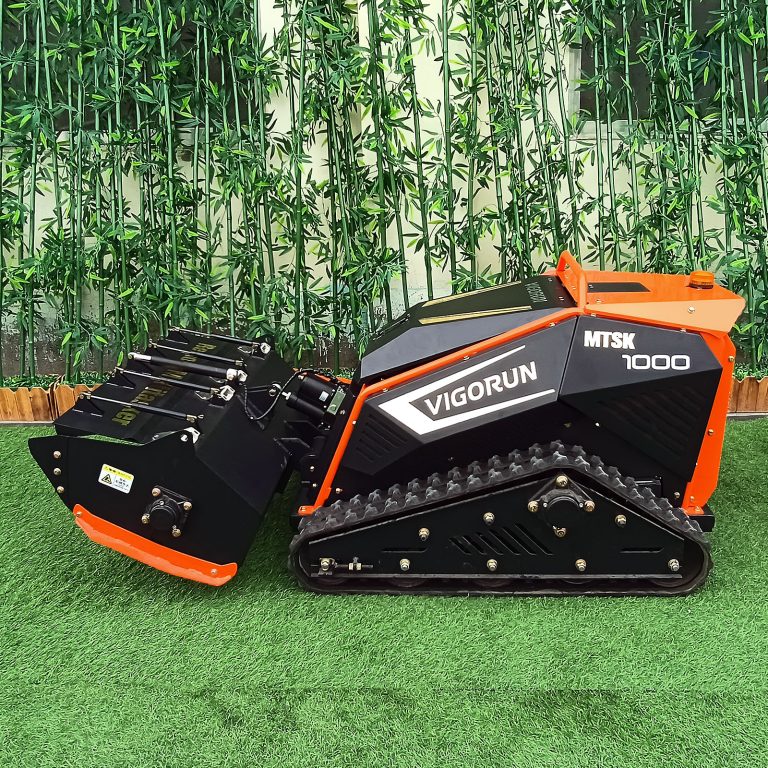
The agricultural robotic gasoline zero turn compact remote control flail mulcher is a game changer in the field of modern agriculture. Designed for efficiency and versatility, this machine is equipped with a V-type twin-cylinder gasoline engine that delivers remarkable power and performance. The Loncin brand engine, model LC2V80FD, boasts a rated power of 18 kW at 3600 rpm, making it a reliable partner for various agricultural tasks.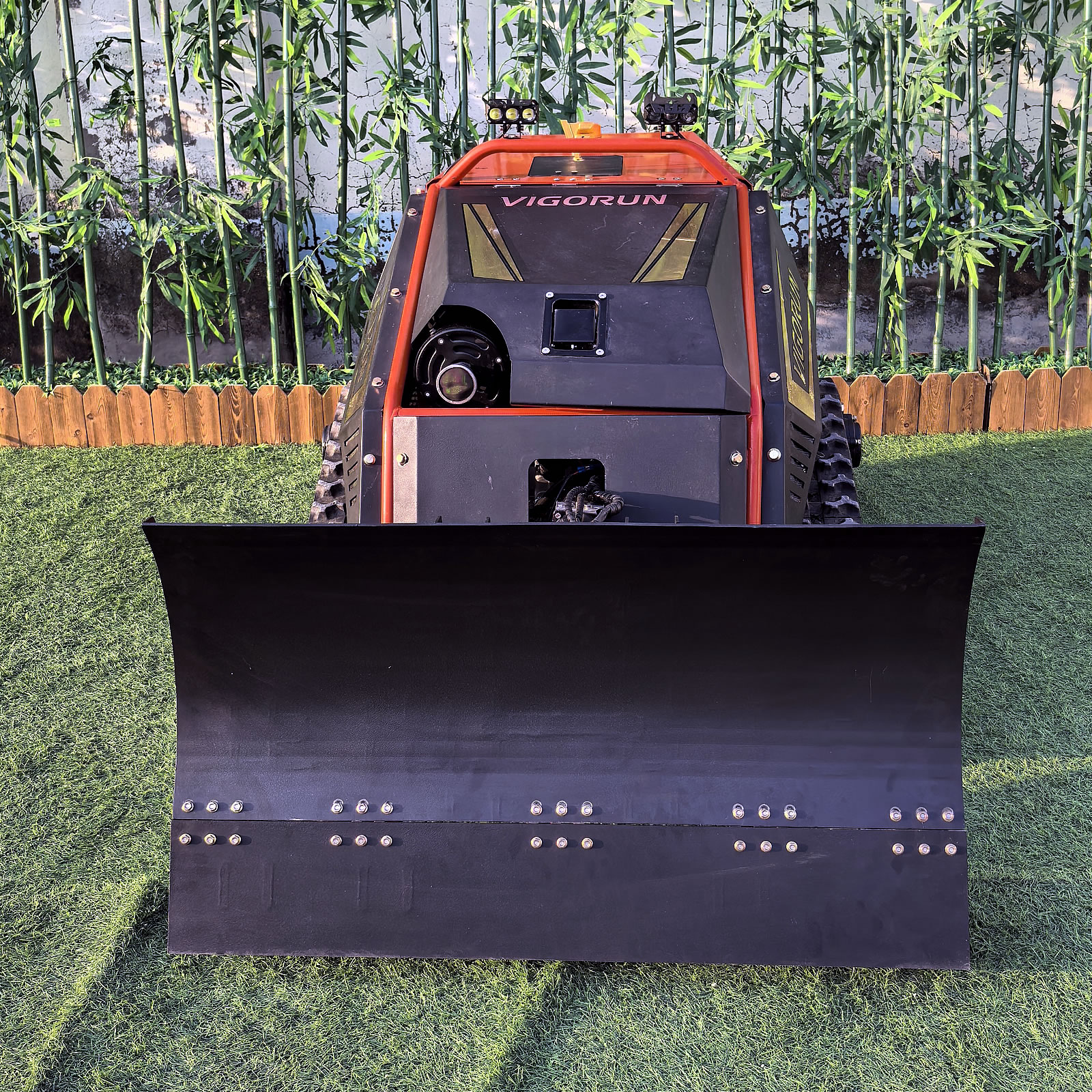
Versatility and Performance of the Agricultural Robotic Gasoline Zero Turn Compact Remote Control Flail Mulcher
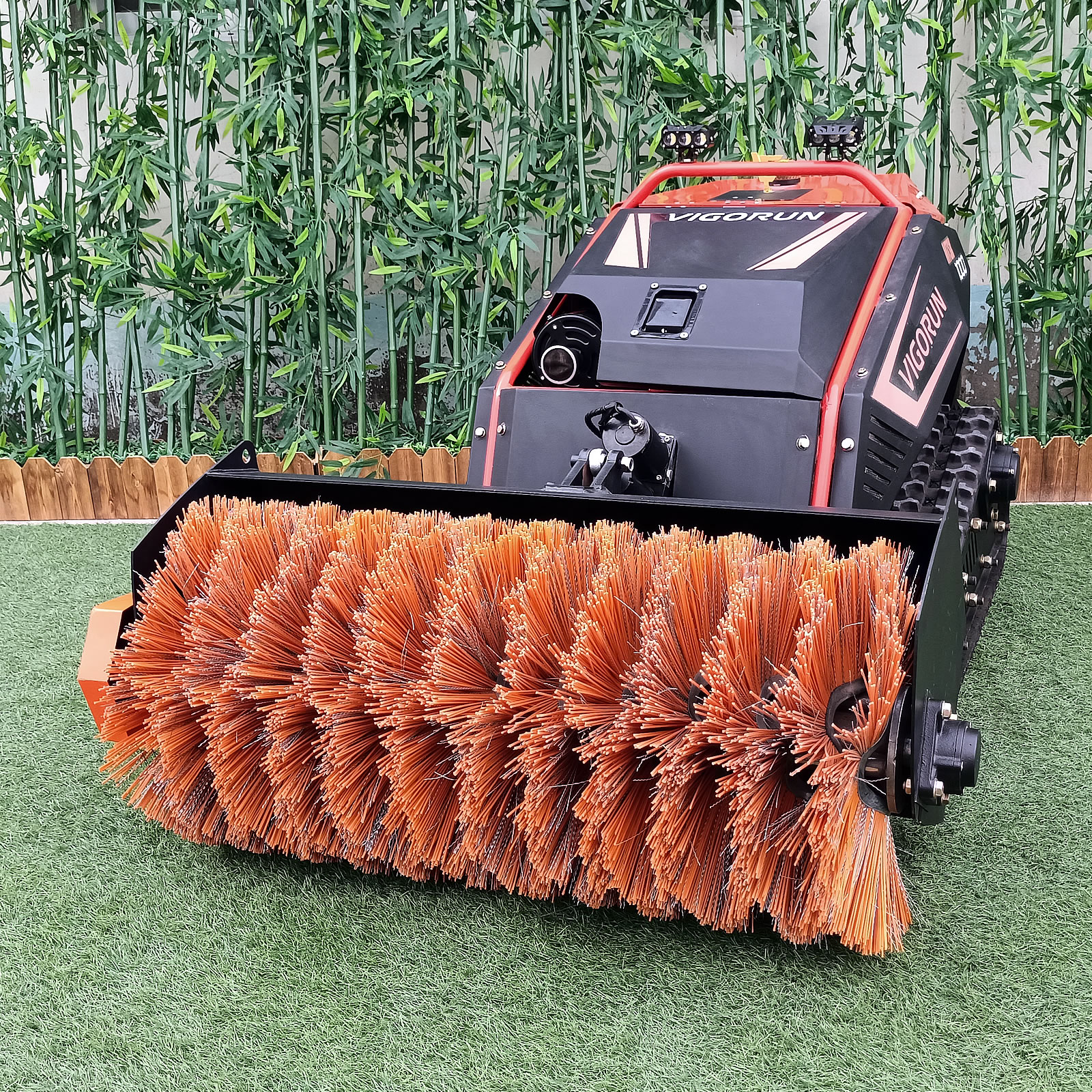
The agricultural robotic gasoline zero turn compact remote control flail mulcher is designed for multi-functional use, making it an ideal choice for a variety of applications. It comes equipped with electric hydraulic push rods that allow for convenient remote height adjustment of attachments. This feature enables operators to adapt the machine quickly to different tasks without the need for manual intervention.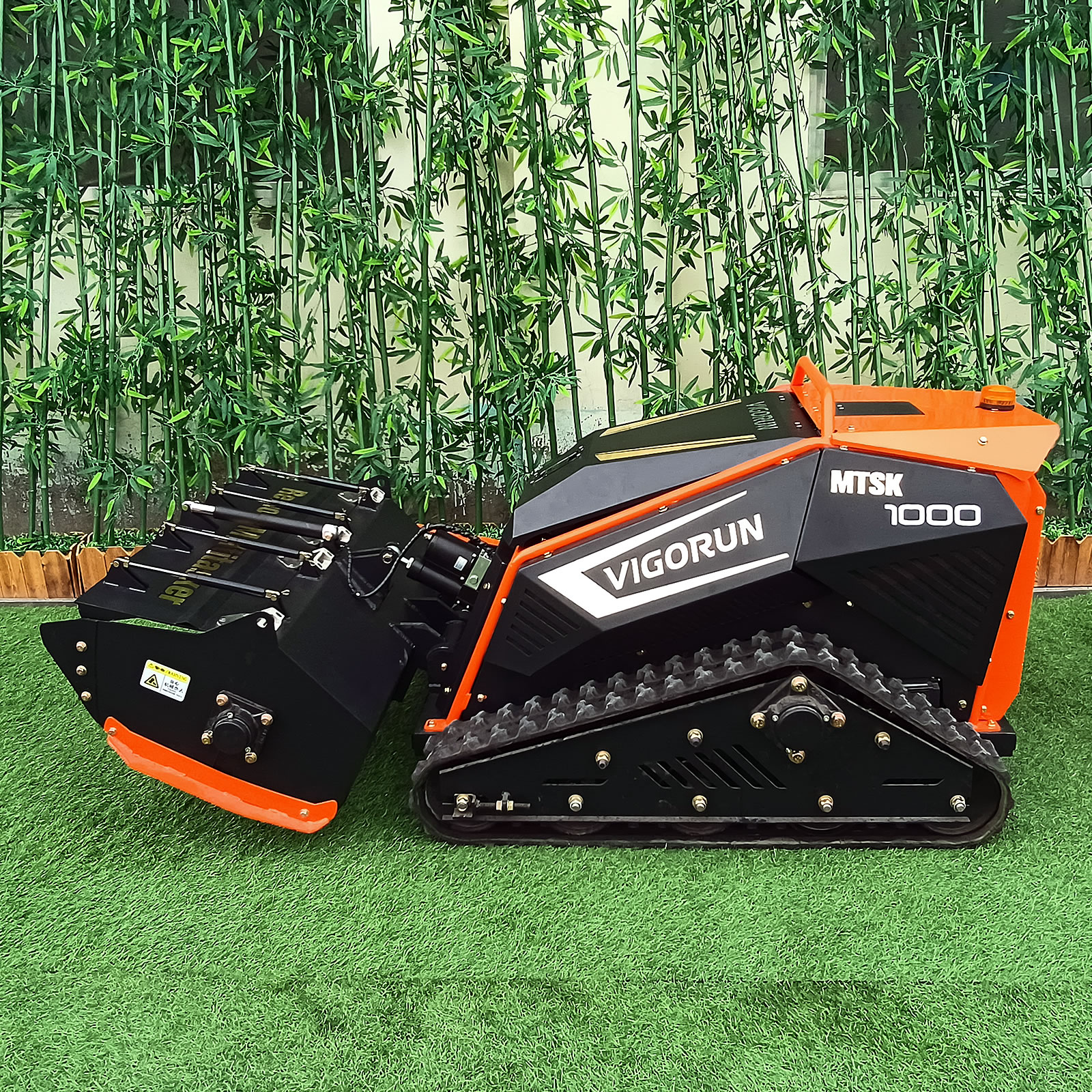 One of the standout features of this innovative machine is its ability to accommodate interchangeable front attachments. Whether you require a 1000mm-wide flail mower, hammer flail, forest mulcher, angle snow plow, or snow brush, this machine can handle it all. This versatility makes it perfect for heavy-duty grass cutting, shrub and bush clearing, vegetation management, and even snow removal.
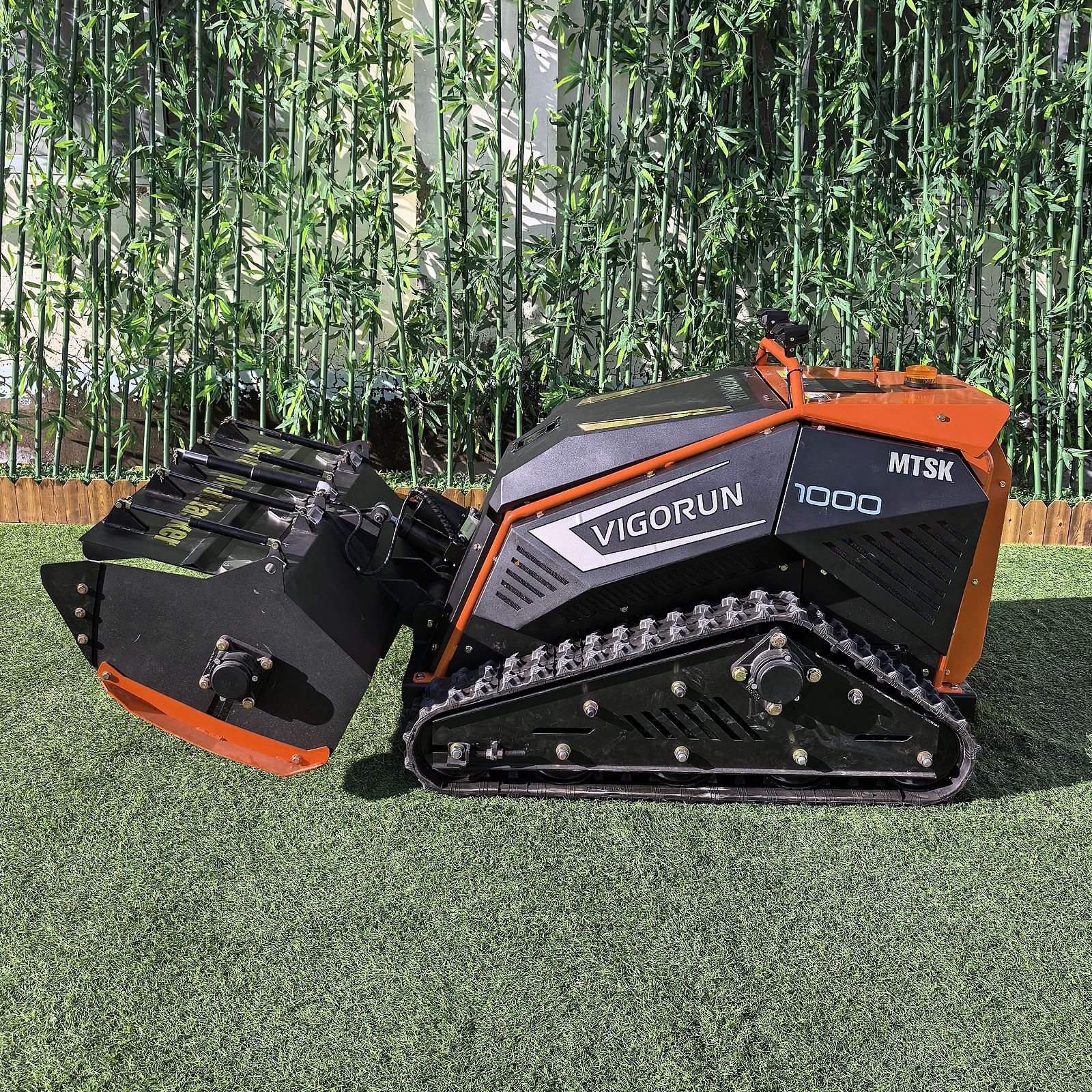 Moreover, the intelligent servo controller ensures precision and stability during operation. By regulating motor speed and synchronizing the left and right tracks, the mower can travel in a straight line without requiring constant adjustments from the operator. This reduces the risk of over-correction on steep slopes, enhancing both safety and efficiency.
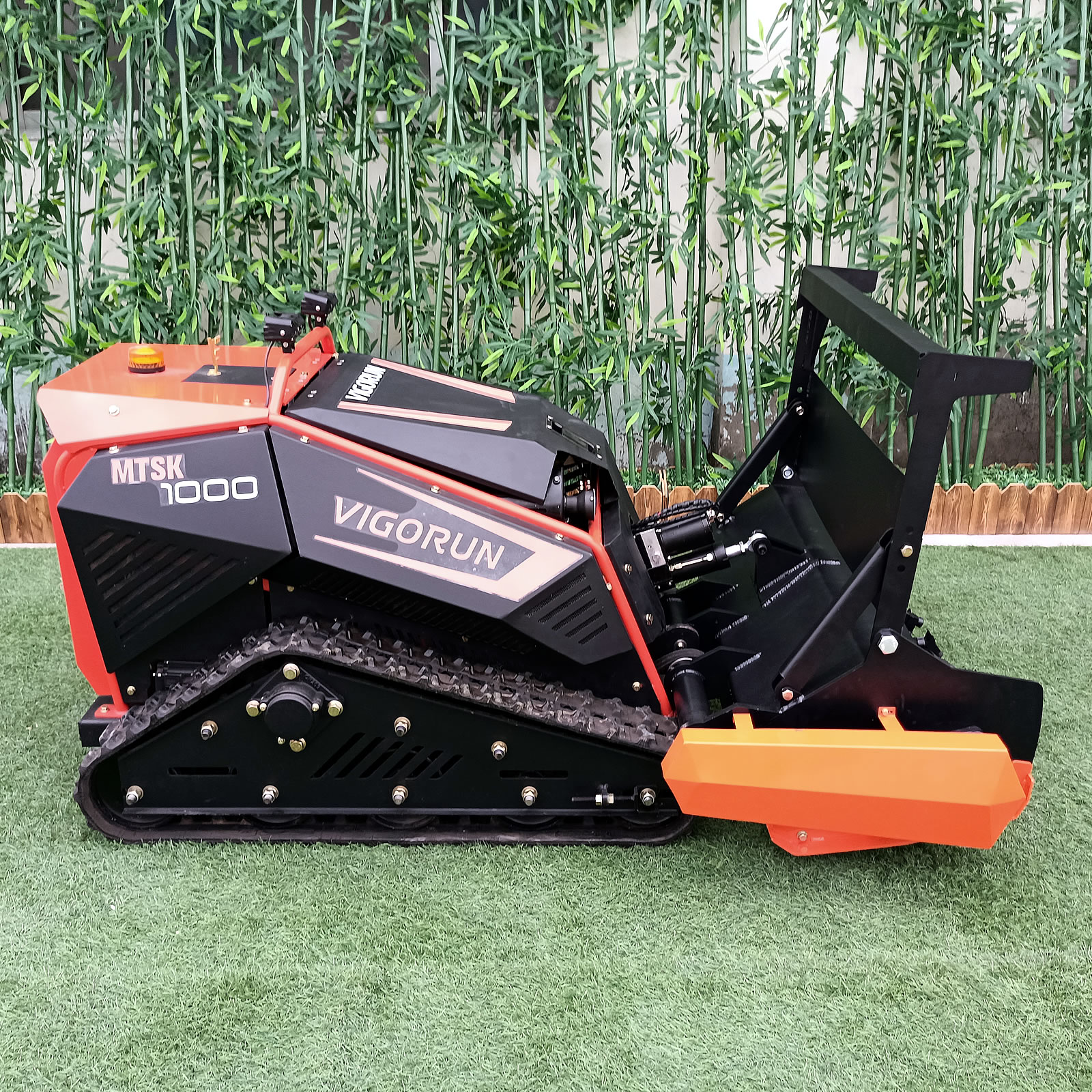 Compared to many competing models that rely on 24V systems, this machine’s 48V power configuration lowers current flow and heat generation, allowing for longer continuous operation. This not only improves performance but also reduces the risks associated with overheating during extended mowing tasks, ensuring that operators can work efficiently without interruption.