Table of Contents
Features of the Dual-Cylinder Four-Stroke 100cm Cutting Blade Crawler Unmanned Brush Mulcher
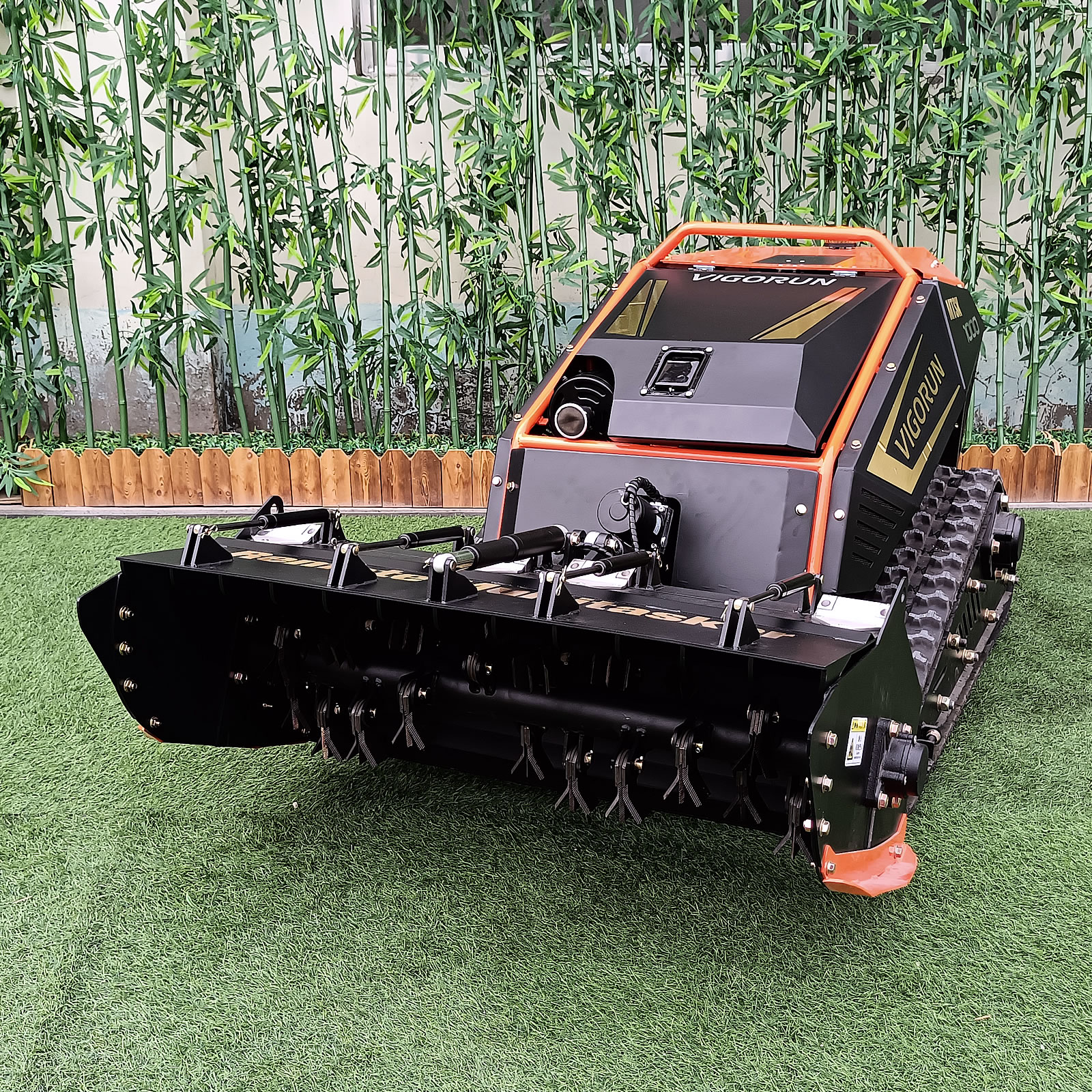 The dual-cylinder four-stroke 100cm cutting blade crawler unmanned brush mulcher is a remarkable piece of machinery designed to tackle challenging landscaping tasks. This innovative equipment is powered by a V-type twin-cylinder gasoline engine, specifically the Loncin brand model LC2V80FD. With a rated power of 18 kW at 3600 rpm and an impressive 764cc capacity, this engine offers robust performance that can handle a variety of heavy-duty applications.
 Safety is paramount in the design of this machine. It features a clutch system that only engages when the engine reaches a specific rotation speed, ensuring smooth operation and preventing potential damage during startup. The built-in self-locking function enhances safety further by keeping the machine stationary when throttle input is absent. This feature effectively mitigates the risk of unintended movement, making it safer for operators working on slopes or uneven terrain.
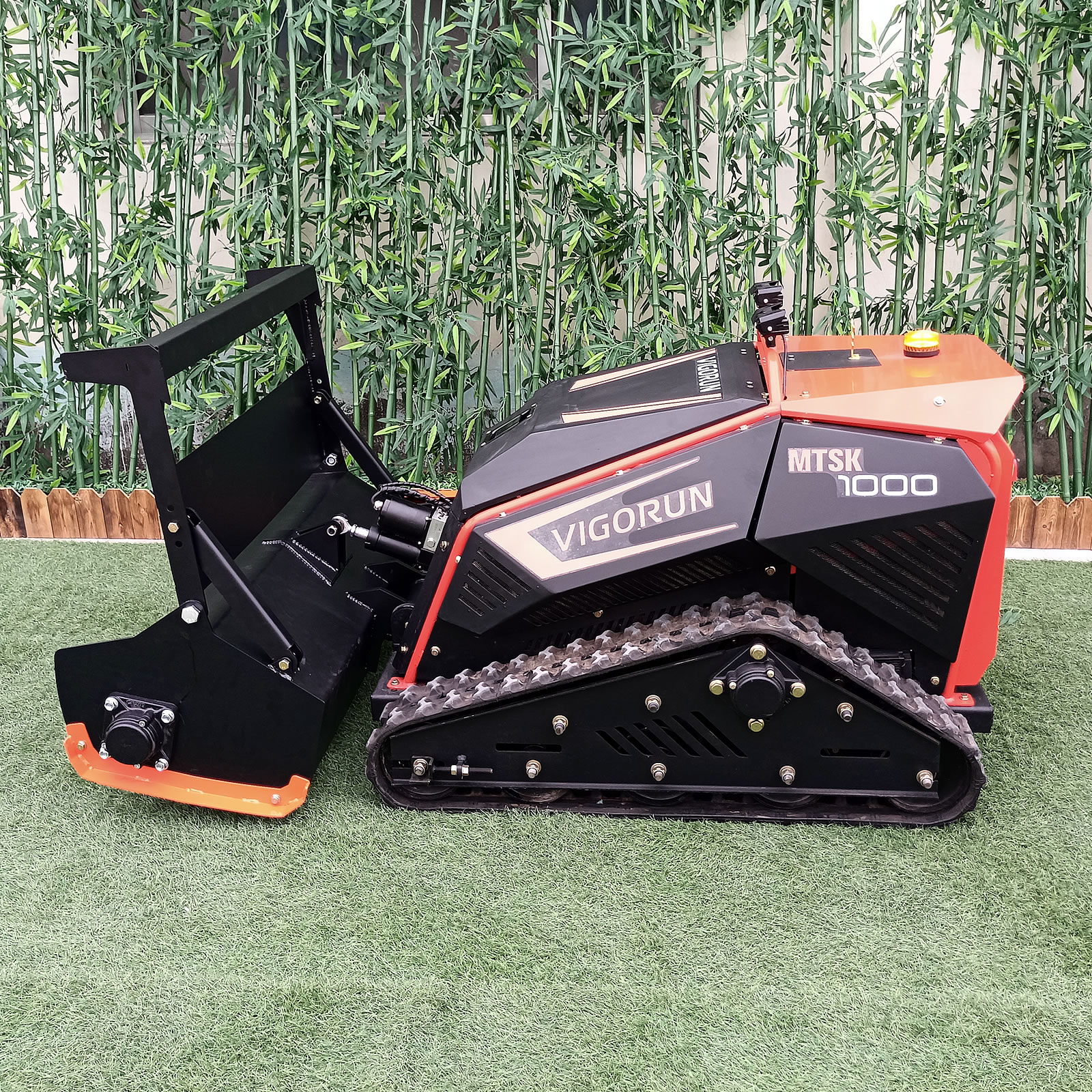 Another notable aspect is the high reduction ratio provided by the worm gear reducer. This mechanism amplifies the already strong torque generated by the powerful servo motors, enabling the brush mulcher to climb steep inclines with ease. The self-locking ability of the worm gear also prevents any backward sliding, even in the event of a power loss, ensuring reliable performance under all conditions.
Versatility and Performance of the Dual-Cylinder Four-Stroke 100cm Cutting Blade Crawler Unmanned Brush Mulcher
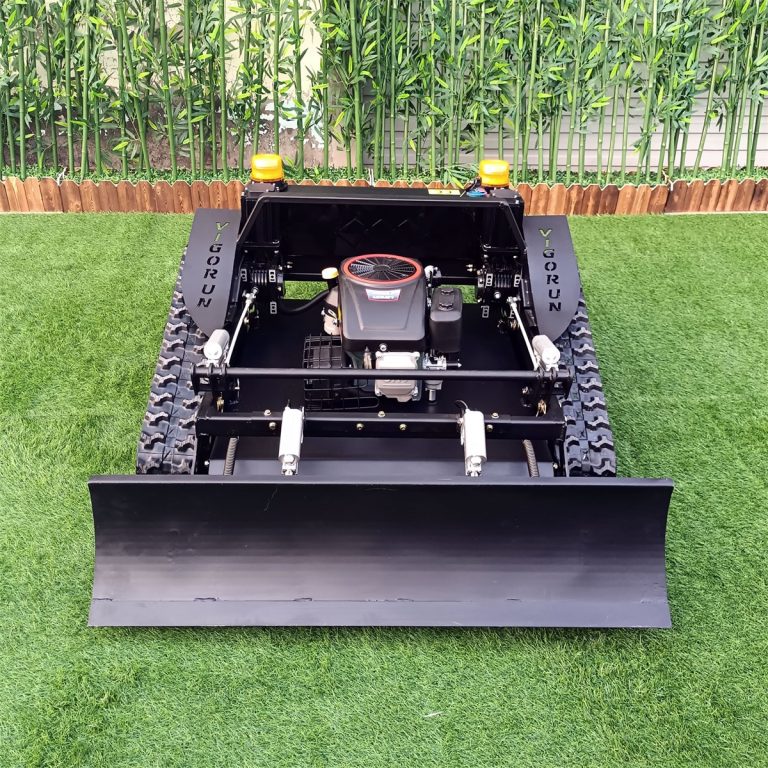
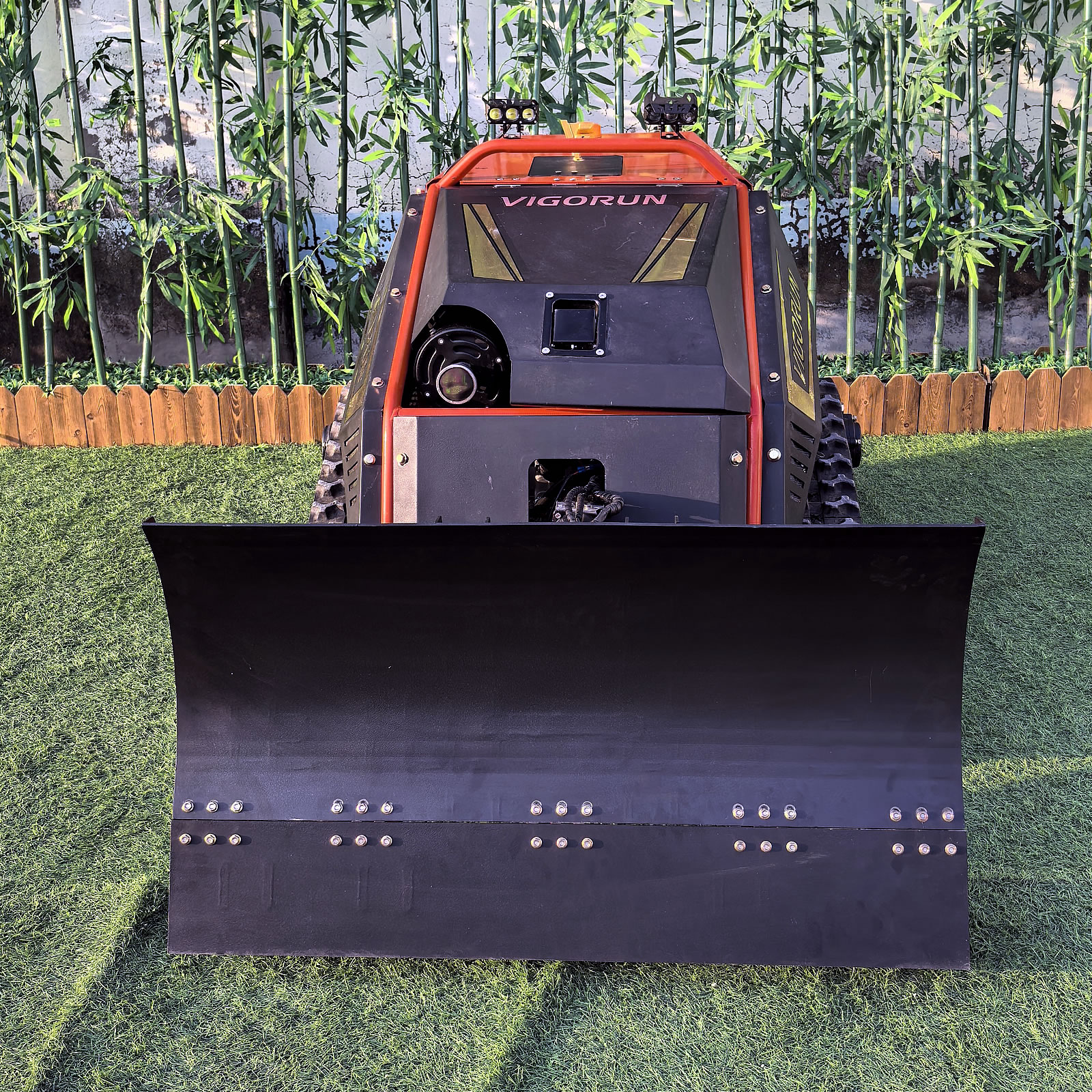
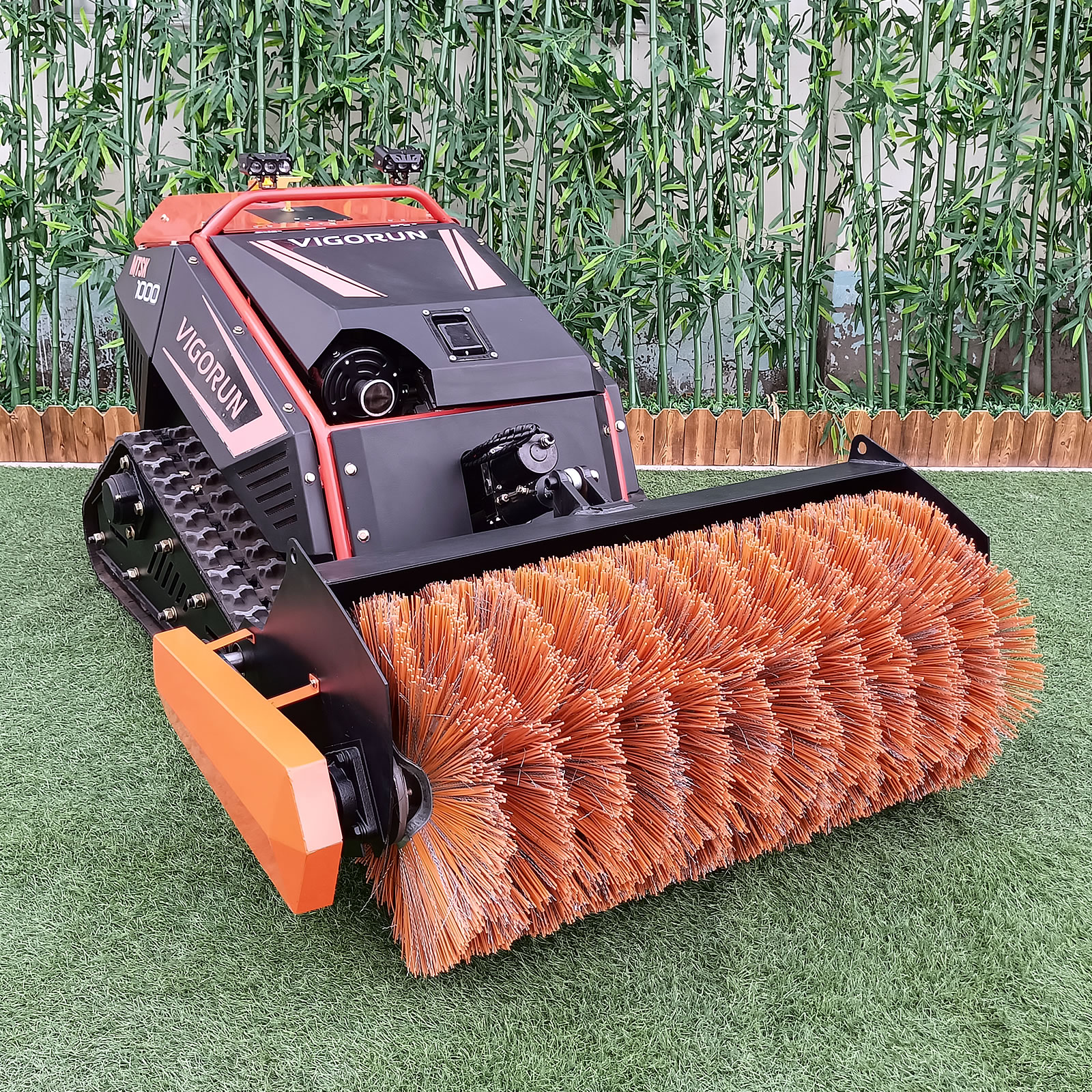
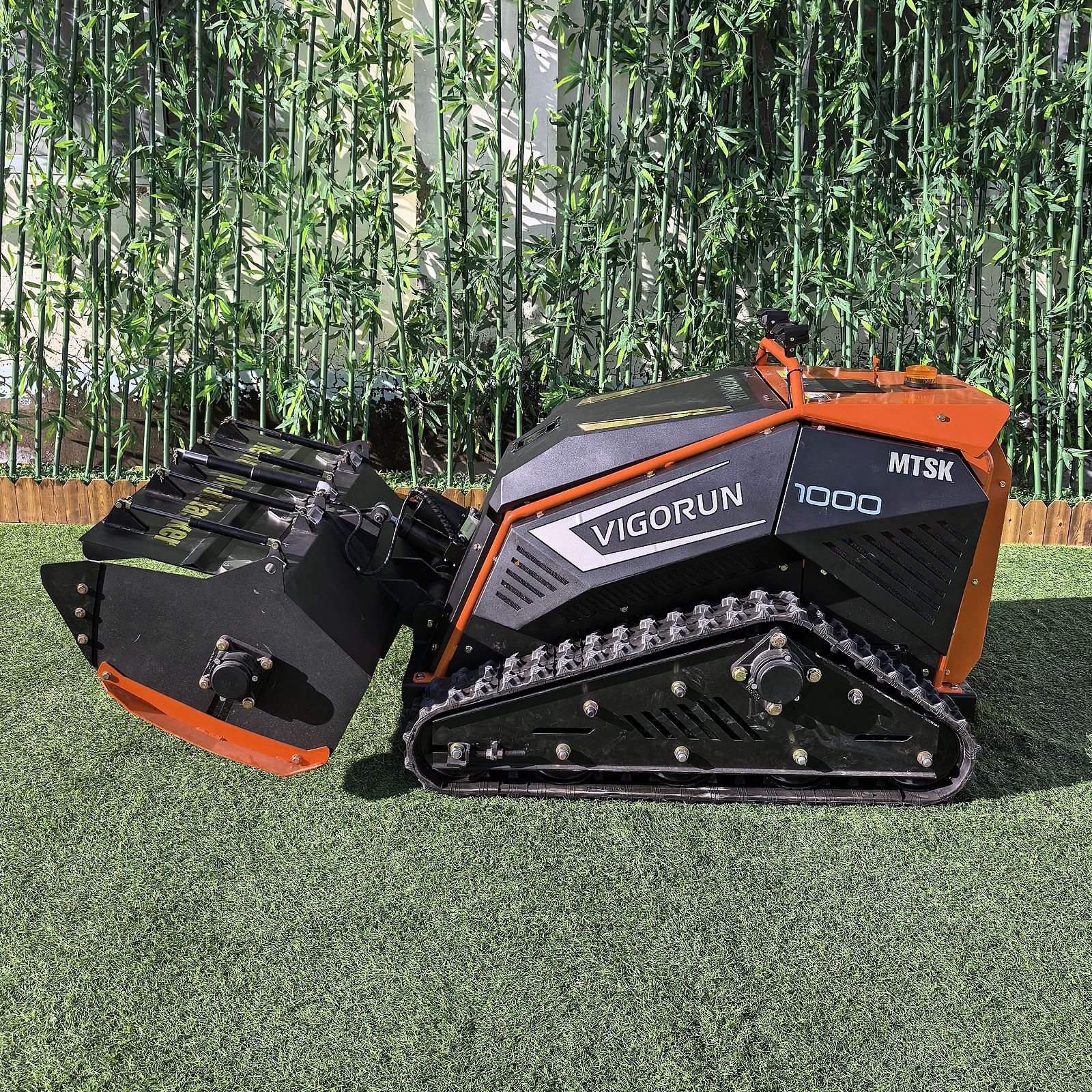 The dual-cylinder four-stroke 100cm cutting blade crawler unmanned brush mulcher from Vigorun Tech is engineered for versatility, capable of handling a range of tasks with its interchangeable front attachments. Whether you need to cut grass, clear shrubs, or manage vegetation, this machine can be equipped with various attachments, including a 1000mm-wide flail mower, hammer flail, forest mulcher, angle snow plow, or snow brush.
 The intelligent servo controller plays a crucial role in maintaining operational efficiency. It precisely regulates motor speed and synchronizes the tracks, allowing for smooth, straight-line travel without constant adjustments from the operator. This feature is particularly beneficial when navigating steep slopes, as it reduces the risk of over-correction and enhances user experience.