Table of Contents
Features of Agricultural Robotic Gasoline 100cm Cutting Blade Compact Remote-Driven Hammer Mulcher
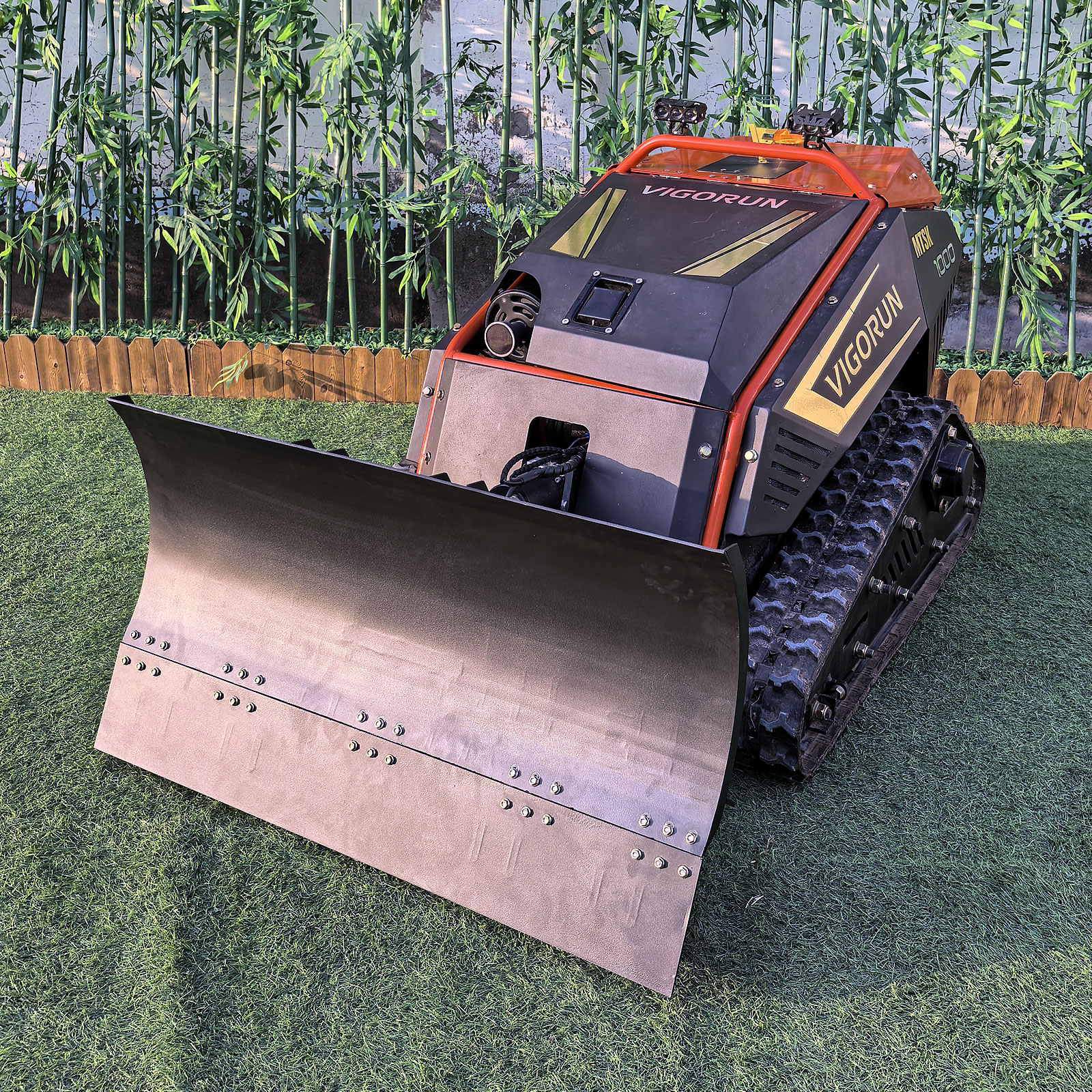 The machine’s design ensures that it remains stationary when not in use. A built-in self-locking function activates only when both power is on and throttle is applied, preventing unintended sliding and enhancing safety during operation. This feature is particularly beneficial when working on sloped terrains.
Furthermore, the high reduction ratio of the worm gear reducer multiplies the already strong servo motor torque, providing immense output torque that aids in climbing resistance. This mechanical self-locking capability ensures that the machine does not slide downhill, maintaining safety and consistent performance even during power loss.
The machine’s design ensures that it remains stationary when not in use. A built-in self-locking function activates only when both power is on and throttle is applied, preventing unintended sliding and enhancing safety during operation. This feature is particularly beneficial when working on sloped terrains.
Furthermore, the high reduction ratio of the worm gear reducer multiplies the already strong servo motor torque, providing immense output torque that aids in climbing resistance. This mechanical self-locking capability ensures that the machine does not slide downhill, maintaining safety and consistent performance even during power loss.
Versatility and Performance of Agricultural Robotic Gasoline 100cm Cutting Blade Compact Remote-Driven Hammer Mulcher
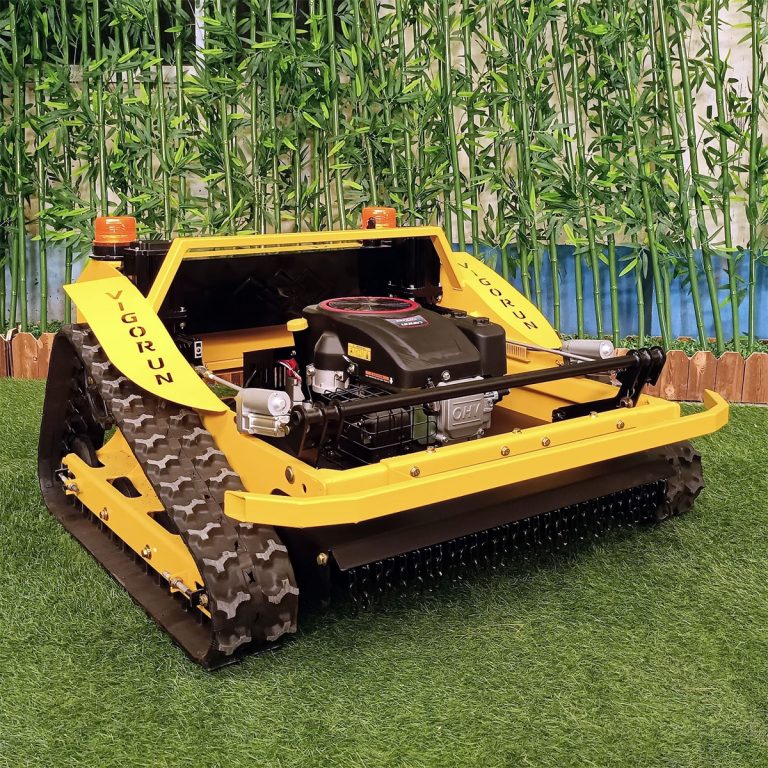
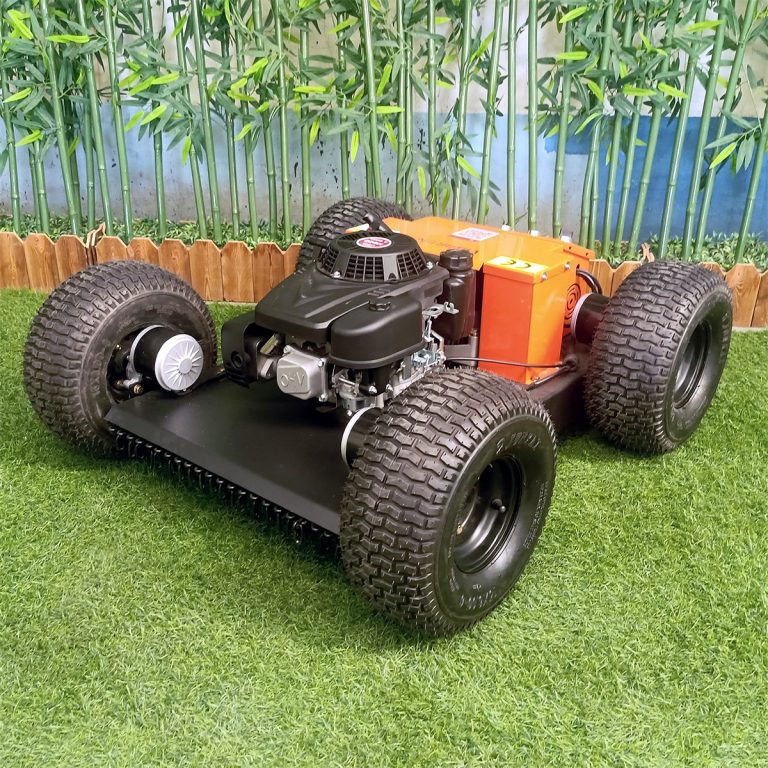
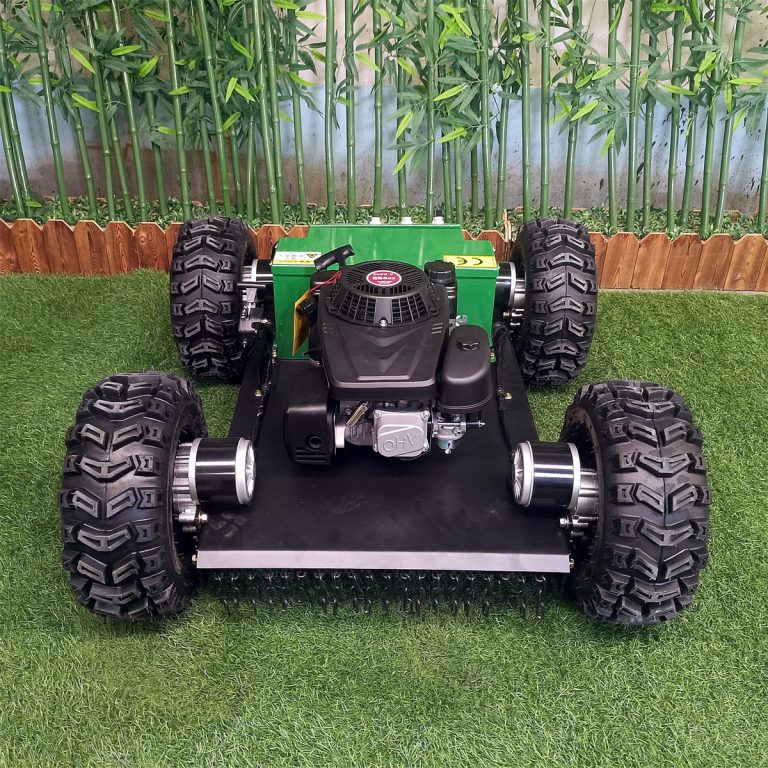
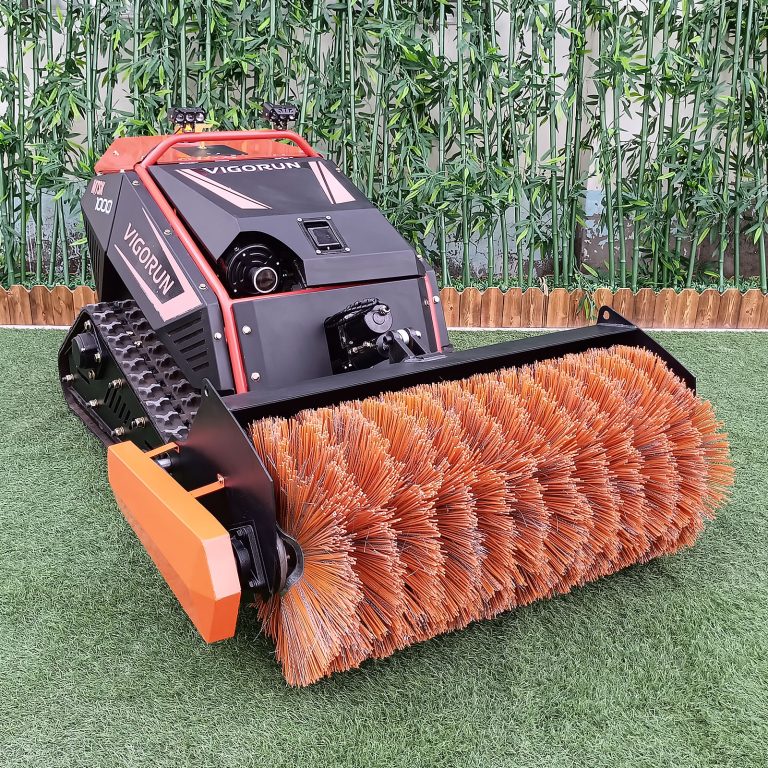
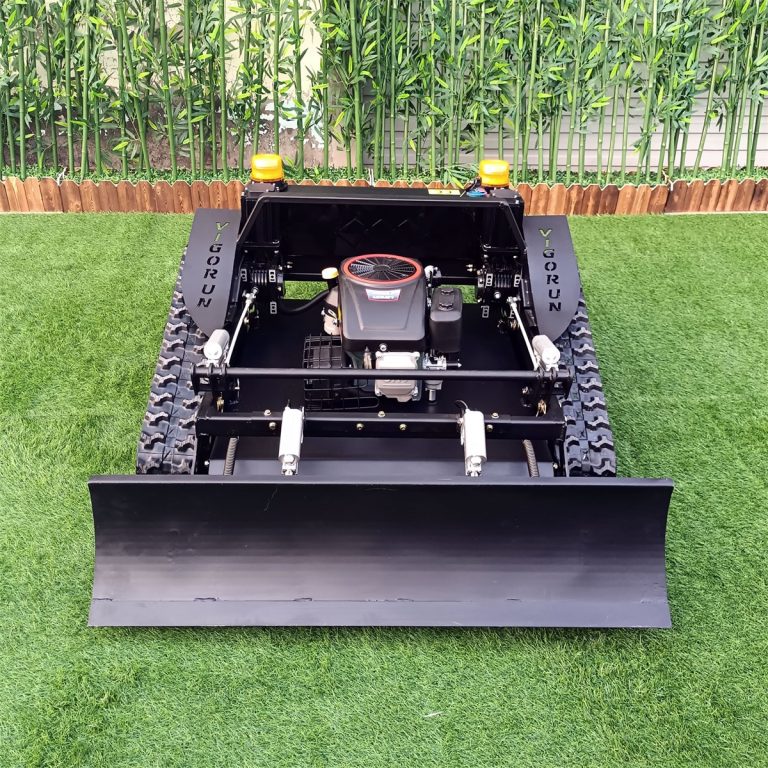
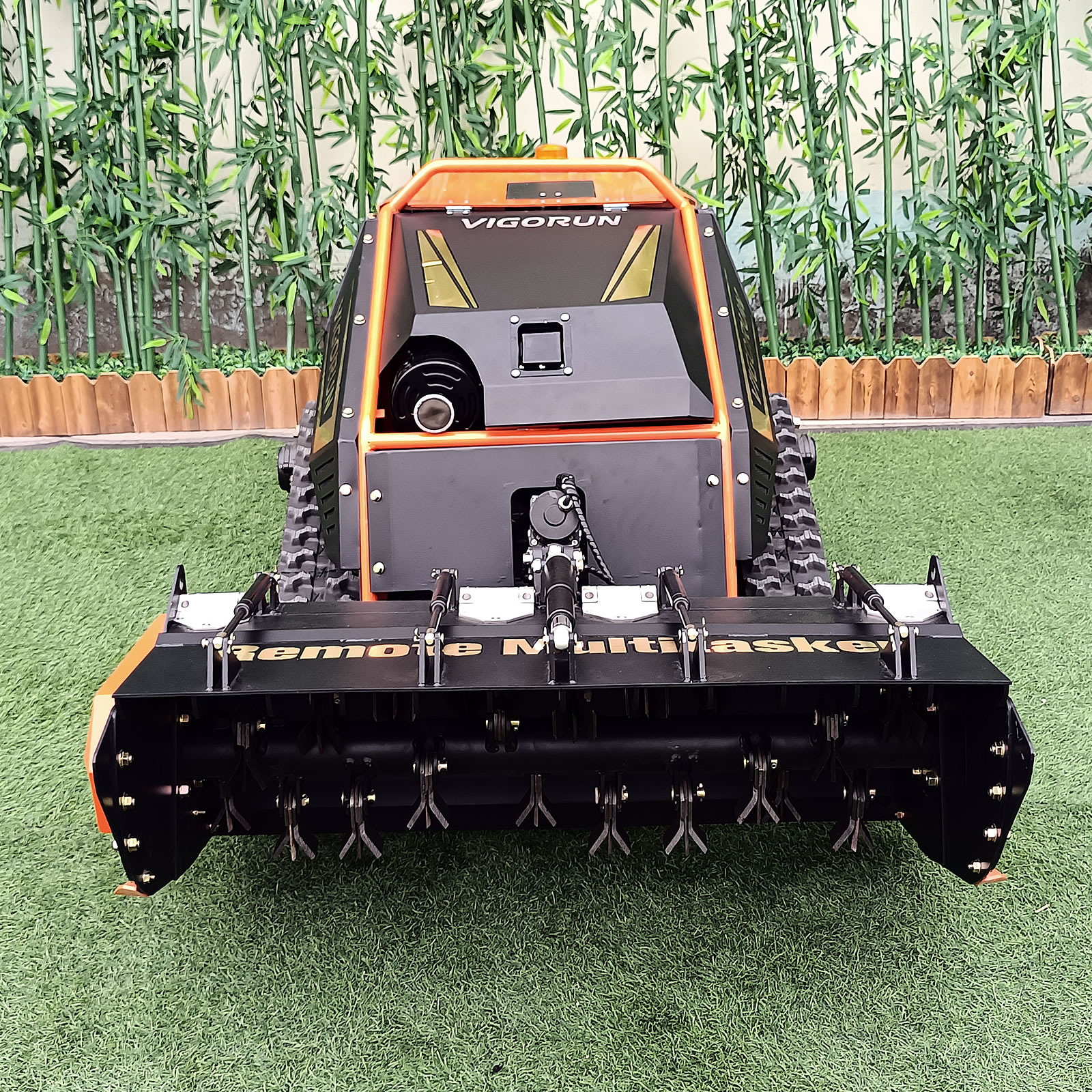
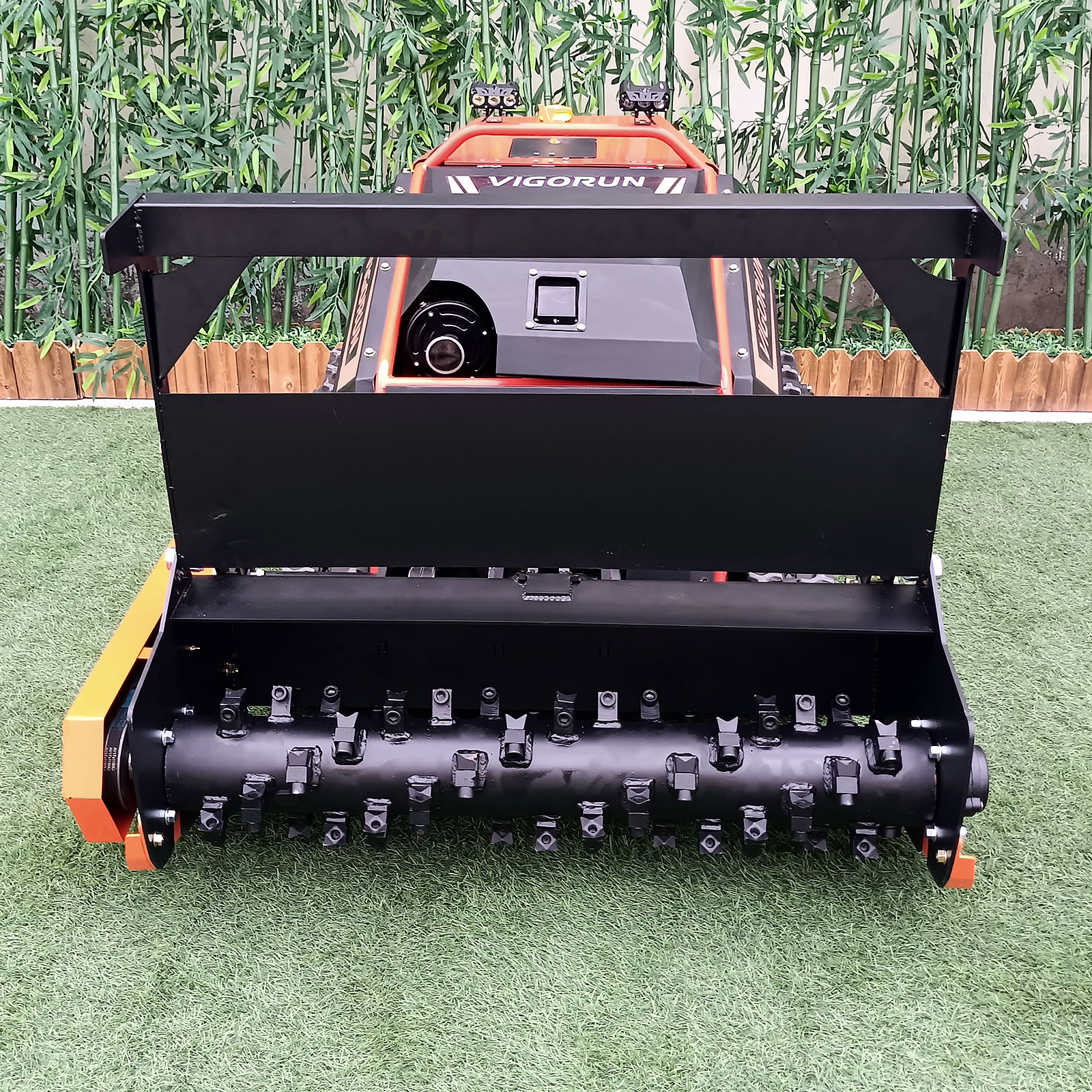
The agricultural robotic gasoline 100cm cutting blade compact remote-driven hammer mulcher is designed for multifunctional use, featuring interchangeable front attachments. Users can equip it with a 1000mm-wide flail mower, hammer flail, forest mulcher, angle snow plow, or snow brush, making it suitable for a variety of applications from heavy-duty grass cutting to snow removal.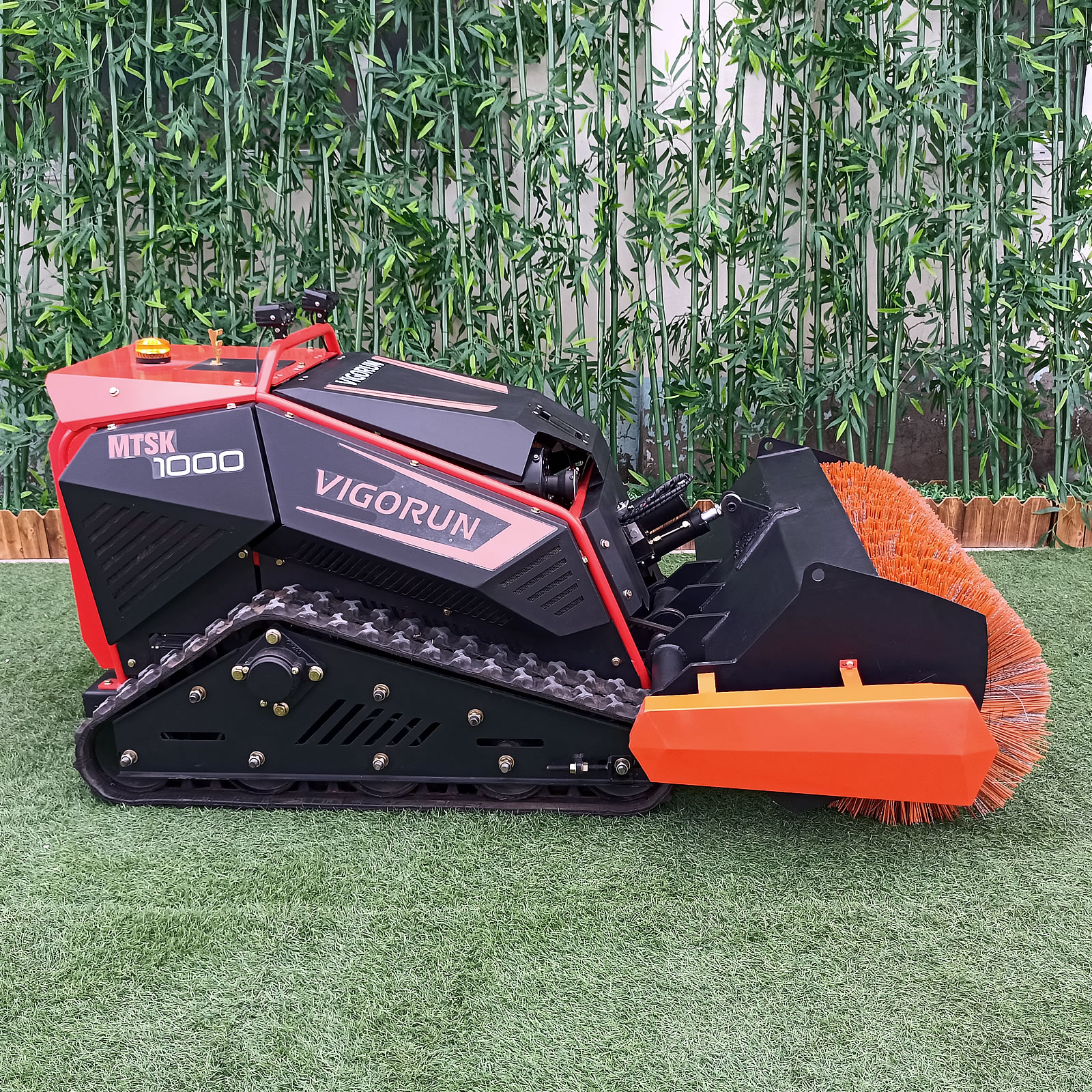 This innovative machine also includes electric hydraulic push rods that enable remote height adjustment of attachments, providing users with the ability to adapt quickly to different tasks without manual effort. This flexibility significantly enhances operational efficiency, especially in demanding conditions.
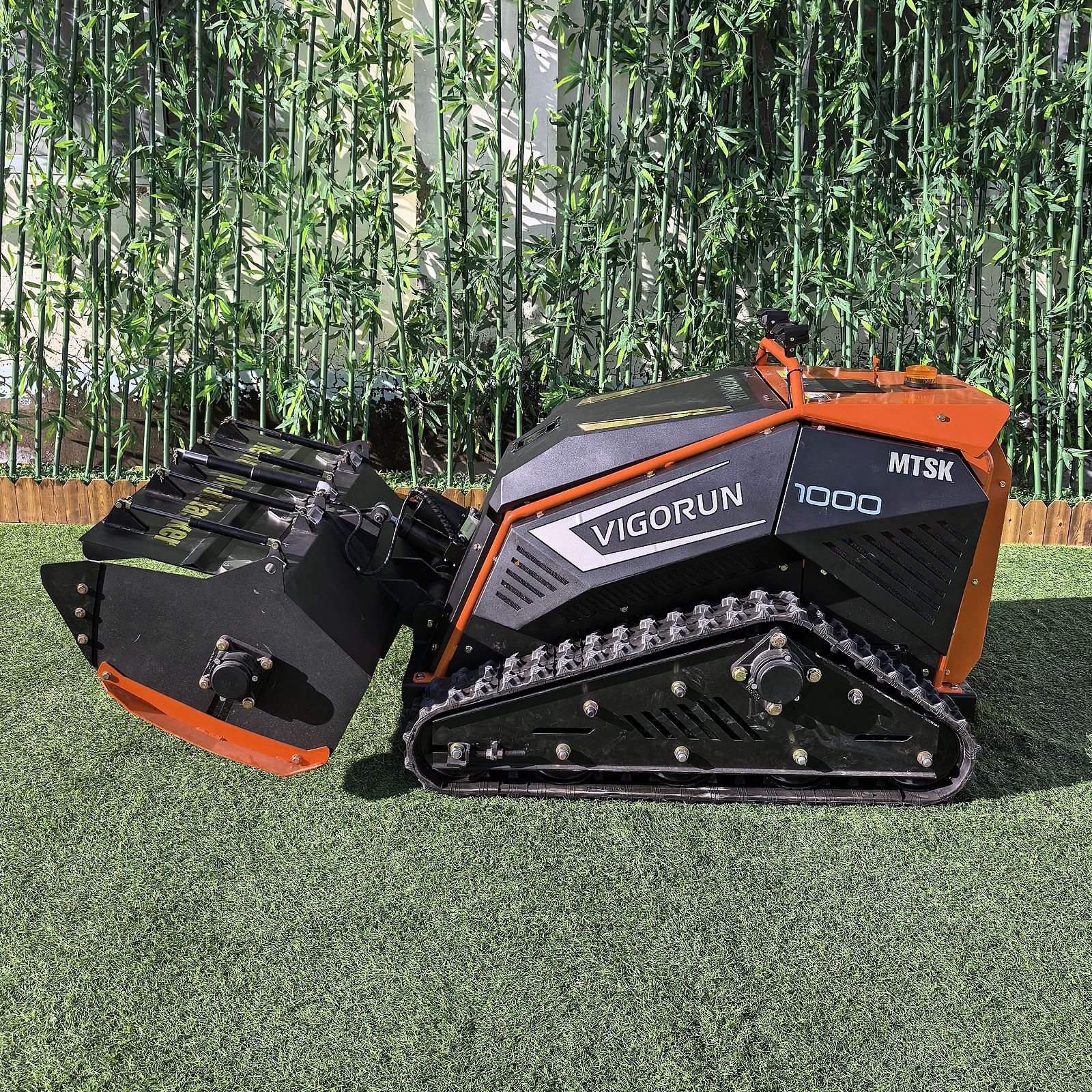 A notable aspect of the machine is its intelligent servo controller, which precisely regulates motor speed and synchronizes the left and right tracks. This feature allows the mower to travel in a straight line without the need for constant remote adjustments, reducing operator workload and minimizing risks associated with overcorrection on steep slopes.
Moreover, compared to competing models that typically utilize a 24V system, this machine’s 48V power configuration lowers current flow and heat generation. As a result, it enables longer continuous operation while reducing overheating risks, thus ensuring stable performance even during prolonged slope mowing tasks.
A notable aspect of the machine is its intelligent servo controller, which precisely regulates motor speed and synchronizes the left and right tracks. This feature allows the mower to travel in a straight line without the need for constant remote adjustments, reducing operator workload and minimizing risks associated with overcorrection on steep slopes.
Moreover, compared to competing models that typically utilize a 24V system, this machine’s 48V power configuration lowers current flow and heat generation. As a result, it enables longer continuous operation while reducing overheating risks, thus ensuring stable performance even during prolonged slope mowing tasks.